Designing for Everyone: The New Standard in Modern Websites
In 2026, inclusive design isn’t optional—it’s foundational to effective websites.
Modern websites are no longer judged solely by how they look. They’re evaluated by how well they work for everyone who uses them. As digital experiences become more central to how organizations communicate, recruit, and deliver services, designing for everyone is emerging as the baseline expectation—not a bonus feature. Websites that prioritize accessibility, usability, and clarity create stronger connections and remove barriers before they become problems.
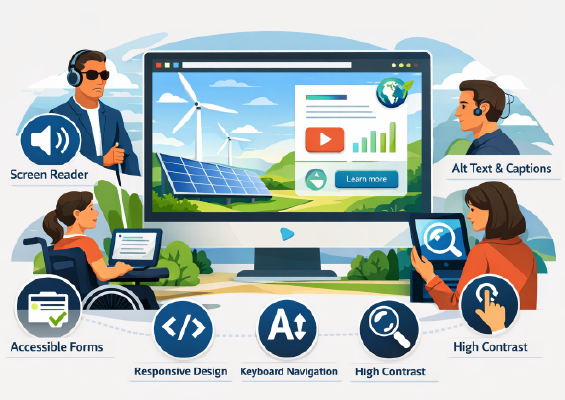
What Does Designing for Everyone Really Mean?
Designing for everyone means creating websites that are usable, accessible, and intuitive for the widest possible audience. This includes people with disabilities, users on different devices, varying levels of digital literacy, and those accessing content in less-than-ideal conditions.
Inclusive website design considers:
- Clear navigation and predictable layouts
- Readable typography and sufficient color contrast
- Keyboard and screen reader accessibility
- Mobile-first and responsive design
Rather than designing for an “average” user, this approach acknowledges real-world diversity and builds flexibility into the experience.
Why Inclusive Design Is Becoming the Standard
As regulations evolve and digital expectations rise, organizations can’t afford websites that exclude users. Accessibility requirements like WCAG guidelines are increasingly influencing procurement, compliance, and credibility—especially for utilities, public-facing organizations, and clean energy programs.
Beyond compliance, inclusive design improves overall usability. When a website is easier to navigate, faster to understand, and clearer in structure, everyone benefits.
The Impact on Modern Website Design Strategy
Designing for everyone shifts website strategy from aesthetics-first to experience-first. Content hierarchy, user flows, and interaction design are planned with intent, ensuring visitors can find information, understand offerings, and take action without friction.
This approach supports:
- Higher engagement and lower bounce rates
- Stronger trust with diverse audiences
- Better performance across devices and platforms
Website Design & Development at EQX
Designing for everyone is central to our Website Design & Development work. We build websites that balance visual clarity with accessibility, performance, and long-term scalability. By integrating inclusive design principles from the start, we help organizations create digital experiences that serve their full audience and support real outcomes.
Why This Matters Moving Into 2026
As digital touchpoints continue to expand, websites must work harder—and smarter. In 2026, successful websites won’t just look modern; they’ll function seamlessly for every user who lands on them.
Designing for everyone isn’t a trend to watch. It’s the new standard.
Let’s Build A Website That Reaches New Heights
Your website should work as hard as you do. Let’s build a stunning, functional digital space your audience will love.