Is Your Website Ready for AI Search and the Future of SEO?
Learn the practical steps that help your website perform well in both traditional search engines and AI-powered search experiences.
Not long ago, the goal of SEO was simple: rank as high as possible on Google. While that goal still matters, the way people search for information is rapidly evolving. More users are asking questions directly through AI-powered tools like ChatGPT, Gemini, Claude, and Google’s AI Overviews, often receiving answers before ever clicking on a website.
So, what does that mean for your organization? It means your website now needs to do more than rank well. It needs to communicate expertise clearly enough that both search engines and AI systems recognize it as a trustworthy source. Here’s how to tell if your website is ready.
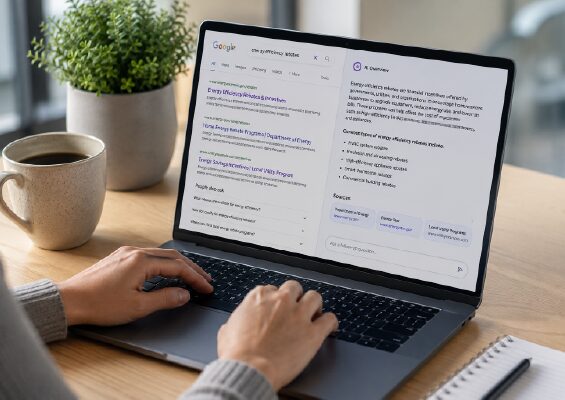
Rankings Are No Longer the Only Measure of Success
For years, marketers measured success by where their website appeared in search results. Ranking on the first page of Google often meant increased traffic and greater visibility.
Today, visibility looks different.
AI-powered search tools summarize information from multiple trusted sources before users ever visit a website. While traditional SEO remains critical, organizations also need to consider whether their content is understandable, trustworthy, and valuable enough to be referenced by AI.
Rather than replacing SEO, AI search builds upon it.
1. Does Your Website Clearly Explain What You Do?
One of the biggest challenges AI faces is understanding organizations with vague messaging.
If your homepage relies on industry jargon or clever marketing language without clearly explaining who you serve and what you do, AI may struggle to accurately represent your organization.
Ask yourself:
- Could someone understand our services within 30 seconds?
- Is our expertise obvious?
- Do we consistently use the same terminology throughout our site?
Clear communication benefits both human visitors and AI systems.
2. Are You Answering the Questions Your Audience Is Asking?
People don’t search for products. They search for answers.
Think about the questions your customers ask every day:
- Which rebate programs do I qualify for?
- What’s the difference between a heat pump and a furnace?
- How does energy efficiency reduce operating costs?
- Where do I find a participating contractor?
Each of these questions represents an opportunity to create content that serves your audience while increasing your visibility across search platforms.
3. Is Your Content Organized Around Topics Instead of Keywords?
Search engines have become much better at understanding context.
Instead of creating dozens of articles targeting slightly different keyword phrases, focus on building comprehensive resources around broader topics.
For example, rather than writing separate posts for every rebate question, create a complete resource center that answers related questions in one logical experience.
This demonstrates expertise while making it easier for AI to understand how your content connects.
4. Is Your Content Current?
AI systems value accuracy.
Outdated rebate information, expired incentives, broken links, or references to old regulations reduce credibility for both users and search engines.
Review your content regularly.
Updating existing pages often provides greater long-term value than continually publishing new articles.
5. Are You Demonstrating Real Expertise?
The internet already contains countless articles repeating the same generic advice.
What AI increasingly values is original expertise.
That might include:
- Program experience
- Case studies
- Industry observations
- Lessons learned
- Original graphics
- Real-world examples
These types of content differentiate your organization from competitors and provide information AI can’t simply find everywhere else.
6. Does Your Website Connect Related Content?
A well-structured website tells a story.
If someone reads an article about home electrification, can they easily navigate to related rebate information, contractor resources, or case studies?
Internal linking helps visitors continue learning while helping search engines understand the relationships between your content.
7. Is Your Website Easy to Read?
AI isn’t looking for keyword stuffing.
It’s looking for clarity.
Make your content easier to understand by:
- Using descriptive headings
- Keeping paragraphs short
- Breaking up information with bulleted or numbered lists
- Defining technical terms
- Writing naturally
If your audience can quickly find the answer they’re looking for, search engines and AI systems are more likely to recognize the value of your content.
8. Are You Building Authority Instead of Chasing Algorithms?
Search algorithms will continue changing.
AI models will continue improving.
Organizations that continually chase every update often spend more time reacting than improving.
Instead, focus on becoming the most trusted source within your area of expertise.
Authoritative websites consistently publish useful information, update content regularly, and prioritize helping readers over gaming search rankings.
That strategy works regardless of how search evolves.
Looking Ahead
The future of search isn’t about choosing between SEO and AI search optimization.
It’s about creating content that deserves to be found.
Organizations that communicate clearly, publish trustworthy information, and continually improve their digital experience will be well positioned no matter how people search.
The technology will continue changing.
Helping people find the answers they need never will.
Looking to Future-Proof Your Website?
Preparing your website for AI search doesn’t require starting over. It starts with understanding how your content is organized, how clearly it communicates your expertise, and whether it answers the questions your audience is already asking.
Explore our Website Design & Development services to see how we help organizations create clear, accessible, and search-ready digital experiences.
If you’re ready to evaluate your website’s AI readiness and strengthen your content strategy, Equinox Creative can help.
Ready to Make Your Website AI Ready?
We’ll help you evaluate your website, identify opportunities, and develop a content strategy that supports both traditional SEO and AI-powered search.